Pawlock & Science · Views:
What to do on study breaks instead of checking your phone
Choose a short break that meets your needs, has a clear ending and makes returning to study easier, without filling every pause with another feed.
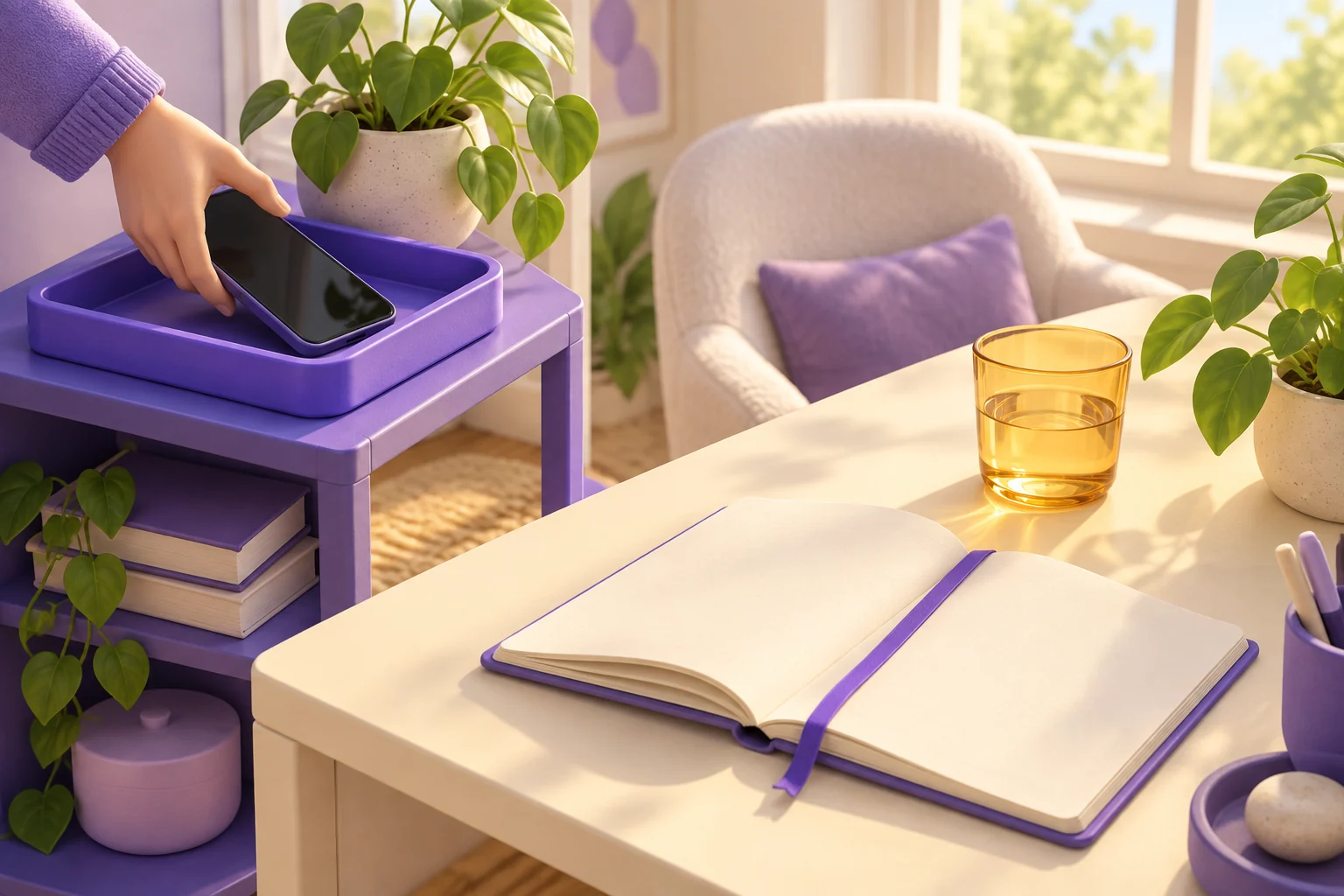
Before a study break begins, choose one simple alternative to your phone: get water, move comfortably, look away from the screen or talk briefly to someone. Leave a note naming your first task when you return. A break does not need to become another productivity project.

Match the break to what you need
- If you have been sitting, change position or take a short walk if that is comfortable and accessible. You do not need a particular exercise routine.
- If you want time away from a screen, leave the browser alone as well as the phone. Looking outside or sitting quietly is an option, not a prescribed treatment.
- Meet practical needs first: water, food or the bathroom. Choose something possible in your library, shared flat or workplace.
- Decide whether a message needs an answer now. Sending that answer is different from opening a feed with no endpoint.
- Write a return cue such as ‘read question two’. Choose a break length that fits your situation; five minutes is an example to try, not a scientifically optimal duration.
When the phone is also your timer
Set the timer before the break, then put the screen out of your hand. Keep necessary calls available if someone depends on you. In a quiet study room, a drink of water or a change of posture may be more realistic than a conversation. Prepare two options so a closed café or bad weather does not leave scrolling as your only plan.
Check the return, not just the minutes
After one break, ask whether it ended when you intended and whether your next action was clear. If you scrolled, identify what you needed rather than writing off the day. A Rutgers laboratory experiment provides a reason to question phone breaks, but it does not establish one ideal break for every person or task.
Pawlock
Pawlock can block selected iPhone apps and websites during a program that covers your study and break routine. Leave essential communication available. Use at least 15 minutes for a scheduled test and check the shield on your device; blocking depends on Screen Time permission.
Frequently asked
Can I listen to music? Yes, if that suits your break. Select something beforehand. If choosing tracks becomes another feed to browse, try a simpler option next time.
Does every break have to be phone-free? No. Necessary communication can stay. This experiment replaces automatic checking with an activity that has a clear ending.
Sources
Related reading
How to avoid phone distractions while studying, even on your phone